
Minnesota’s Hmong population is second only to California, and St. Paul is home to the largest urban population of Hmong in the world.
NOTE: Understanding the role culture plays in health care is essential. Still, patients are individuals – each person’s preferences, practices, and health outcomes are shaped by many factors, a concept known as intersectionality. Advancing whole-person health empowers individuals to improve their health and well-being in multiple interconnected biological, behavioral, social, spiritual, and environmental areas.
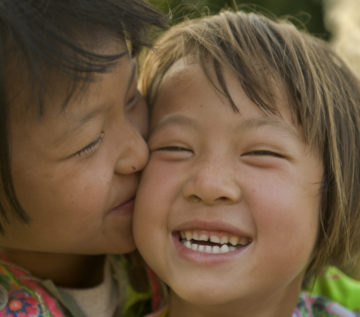 Hmong in Minnesota
Hmong people are a distinct ethnic group with ancient roots in China. Minnesota is home to the second-largest population of Hmong in the U.S. at 66,000, and St. Paul has more Hmong than any other metro area. Over half of the Hmong population in the U.S. was born in America.
The Hmong people in Minnesota primarily arrived from Laos. They began immigrating to the U.S. in 1975, fleeing genocide and political persecution after the Vietnam War. In their native lands, most Hmong were farmers. Hmong Americans have tapped into their agricultural heritage and make up more than 50% of all the farmers in the Twin Cities metropolitan farmers markets.
“Every illness is not a set of pathologies but a personal story.”
– Anne Fadiman, author,
To learn more
- Hmong in Minnesota/Hmoob Hauv Minnesota. Artifacts, photographs, and publications that tell the story of the Hmong people in Minnesota. Minnesota Historical Society.
Four-fifths of Hmong Minnesotans speak a dialect of Hmong at home, either white or green dialects. The differences in these dialects can be considered similar to the differences in the British and American forms of English.
The names — white and green — refer to the colors and patterns of each group’s traditional clothing. White Hmong women typically wear a white pleated skirt. Today, most Hmong don’t limit their fashion to the dialect they speak.
Many Hmong language speakers say they speak English “less than very well,” according to the National Library of Medicine. Elders, especially women, are less likely to speak English well. Scholars suggest the Hmong written language was lost in the 1600s due to persecution. It did not become a written language again until the 1960s and has few medical terms.
“Patients who experience language barriers have been shown to receive poorer quality care than patients speaking the native language, contributing to the well-documented health disparities experienced by migrant groups.”
– NIH National Library of Medicine
To learn more
- Interpreter Roster: Spoken Language, Health Care (Minnesota Department of Health)
- 10 Things about Hmong Culture, Food, and Language You Probably Should Know (Minnesota Public Radio)
Health disparities prevent people from receiving high-quality care and the ability to achieve good health. Coupled with low health literacy, health care barriers, and cultural differences, Hmong individuals face major health risk factors and increased morbidity and mortality.
Hmong in Minnesota face several disparities in health outcomes and care delivery compared to the overall population. Some health issues are genetic; many are tied to social inequities and inadequate access to Hmong-informed health care professionals.
“As a Ph.D. student enrolled in a neuroscience and public policy graduate program, I have adapted to the experience of being the only Hmong American in most scientific settings.”
– Kao Lee Yang,
Among Hmong Americans:
- There are lower cancer screening rates than White Americans and other Asian Americans.
- They are twice as likely to die from stomach cancer than White Americans.
- Females are 2.5 times more likely to die of cervical cancer than White Americans.
- Vaccination rates are lower than in other population groups.
- Diabetes rates are higher than White Americans and higher than other Asian American population groups.
To learn more
- Minnesota Compass: Hmong Population Facts
- Review of Hmong-related Health Problems: A Quick Guide for Healthcare Providers
- Barriers to Cancer Screening Among Hmong Americans: The Influence of Health Care Accessibility, Culture, and Cancer Literacy
- Lay Health Educators Increase Colorectal Cancer Screening Among Hmong Americans
Social determinants of health are economic and social conditions that influence the health of people and communities.
- About 16% of Hmong in Minnesota are below the federal poverty level, with the poverty rate for Hmong dropping steadily (that is, improving, with fewer Hmong living in poverty) for the last three decades.
- As of 2013, 24% of Hmong Minnesotans do not have a high school diploma or GED, compared to 3% of White Minnesotans; 21% had a bachelor’s or higher degree, compared to 37% of White Minnesotans.
- In a 2018 study of health literacy among Hmong American immigrants, half of the participants reported low levels of health literacy and difficulty understanding instructions and materials.
“As a Hmong American, having a college education is something that is intangible…I feel like my degree is the conclusion of [my parents’] refugee journey, and it empowers me to do better.”
Lost A-Hmong the Data: Disaggregating the Hmong Student Experience
To learn more
- Minnesota Compass: Hmong Population Facts – Hmong Population Minnesota, 2016-2020. Data on demographics, economy, health, housing, transportation, and workforce about these Minnesota residents, including native- and foreign-born residents. Cultural identification is based on a combination of race, ancestry, and birthplace.
Hmong people often maintain the tradition of being family-oriented, with elders commonly supporting and taking care of their grandchildren.
Hmong culture is patriarchal, and clans (vs. individuals or nuclear families) are the basic unit of social and political organization. Hmong are organized into 18 clans, determined by ancestral lineage. Each person has a last name representing the clan to which they belong. Traditionally, when a woman marries, she keeps her maiden name; however, spiritually and culturally, she belongs to her husband’s clan. Some Hmong American women have chosen to legally change their last names to their spouses’. Some Hmong maintain traditional culture, speak mostly Hmong, and live and work within a close-knit Hmong community that adheres to the clan system more than others. Typically, younger members of Hmong communities are more assimilated into American culture than elders.
The traditional Hmong religion, which in the Hmong language is literally referred to as “Hmong tradition,” is a blend of animism with shamanism. Many Hmong are associated with a Christian church; some practice a mix of traditional beliefs and Christianity, and others do not practice a faith.
“Without Hmong religiosity, we will just become another Asian face.”
– Paj Ntaub Lee, txiv neeb/shaman
To learn more
- Hmong Cultural Guide Building Capacity to Strengthen the Well-Being of Immigrant Families and Their Children: A Prevention Strategy (The Center for the Advanced Studies in Child Welfare, University of Minnesota School of Social Work)
- Hmong Cultural Profile. Information on history, culture, and community with emphasis on health-related issues (Ethnomed, University of Washington)
- 10 Things about Hmong Culture, Food, and Language You Probably Should Know (Minnesota Public Radio)
The traditional Hmong diet was primarily plant-based, with very little meat consumption and almost no consumption of processed foods. Since arriving in the United States, access to more meat, processed foods, and fast food has vastly changed the Hmong diet and significantly impacted rising rates of obesity, diabetes, and other chronic illnesses.
However, many Hmong food traditions are practiced, such as inviting people to eat together; eating a balanced meal of rice, vegetables, and meat; eating fresh foods rather than processed foods; extended families cooking and preparing food together; men fishing and hunting animals to share with family and relatives; and family members growing their own gardens of fresh vegetables and herbs.
During cultural rituals and celebrations, hosts plan a large feast and may invite extended families to attend and prepare food. It is considered generous and shows prosperity. These celebratory meals include fattier meats. It is a custom to encourage guests to “eat until you are stuffed” as a gesture of hospitality. Guests often eat large amounts to show respect to their hosts.
“Our history is intrinsically woven into the food we eat. Every dish has a narrative, and if you follow that narrative closely enough, you understand the people.”
– Yia Vang,
To learn more
- Culturally Informed Clinical Practices for Healthy Hmong Lifestyles St. Paul – Ramsey County Public Health, 2015. (56-page PDF)
- Minnesota’s Fish Consumption Educational Outreach for the Hmong Community. MDH. (39-page PDF)
More traditional Hmong people often are very polite, do not want to disappoint those in authority, and may say “yes” even when they do not understand their clinicians. Because herbal medicines are common, clinicians may want to discuss the use of alternative treatments with their Hmong patients.
According to shamanism, the Hmong believe that diseases are caused by a departed ancestral spirit or the souls of those who have suffered an illness. The latter explains why certain Hmong believe that illness results from the separation of body and soul, which may or may not be related to offending an ancestor rather than a biological process. Moreover, the wish of the soul to leave the body it occupies is another concept related to the disease process according to the Hmong culture. As a result of these conceptions, some believe Western medicine is not the best treatment option for illnesses, and a traditional healer called the shaman can instead treat them. (See reference below)
In some Hmong communities, there are beliefs that there may be non-biological reasons for illness, and some reasons might be considered positive – such as the indication of a possible spiritual calling to become a Shaman. Understanding what the person weighs when considering Western treatment can help support their decisions.
“Hmong Health Care Professionals Coalition (HHCPC) members are advantageous in health settings because they serve as a trusted bridge between Hmong patients and Western health care providers. They promote cultural awareness in health care practices by sharing information on health beliefs and practices of the Hmong.”
Hmong Health Care Professionals Coalition
To learn more
About 40% to 85% of Hmong Americans have experienced a mental health issue compared to 20% to 26% of the general population. Anxiety, clinical depression, and post-traumatic stress disorder are the most common, especially for those who faced cultural destruction and genocide and were forced to flee their homeland. The effects of historical trauma are being studied. (Historical trauma is multigenerational trauma experienced by a specific cultural, racial, or ethnic group.) Epigenetic studies have demonstrated that psycho-social trauma can impact the future expression of particular genes, which, in turn, may have a negative effect on health.
Ongoing research will lead to a better understanding of the impact of individuals experiencing trauma on health, functioning, and quality of life, as well as its impact on subsequent generations. Older immigrants are less likely to have English skills, which may increase the loneliness, isolation, and depression caused by discrimination, torture, and loss of homeland.
“Sometimes our own families or ancestors or grandparents have not even dealt with their trauma, and how does that still affect the mental health of our children today?”
– Mary Her, clinical supervisor at the Wilder Foundation
To learn more
- Historical Trauma and Cultural Healing (University of Minnesota Extension)
- Mental Health Among the Hmong Population in the U.S.: A Systematic Review of the Influence of Cultural and Social Factors
- Project Tshav Ntuj (Preventing suicide among Hmong youth)
- What is Epigenetics? (CDC)
“Cov laus lawv noj ntau diav mov lawv yeej paub dau”
(English translation: Elders have eaten more spoonfuls of rice and therefore know more)
– Hmong proverb
Often, Hmong elders do not fit the chronological ages traditionally established in the U.S. for defining elders.
According to Stanford Medicine, “Historically, it was not uncommon for Hmong couples to begin having children at age 15 and become grandparents by 30-40 years of age. Because many older Hmong people endured harsh living conditions in Laos during the war, in refugee camps in Thailand, and had a difficult transition to the U.S., their traumatic life experiences have likely accelerated the aging process”. Also, Hmong people do not traditionally quantify an elder by a specific age for two primary reasons:
- Without documentation, people did not know their exact ages.
- Elders are generally defined by important life experiences and the wisdom acquired over a lifetime. Life expectancy of the Hmong is higher for those born in the U.S. compared to those of Hmong immigrants. However, the median life expectancy of the Hmong in the U.S. is 57 years compared to 77 years among non-Hispanic whites (NHW). It is known that Hmong individuals are challenged with significant health risk factors and increased morbidity and mortality.
Family members often provide Palliative and hospice care, but it can also be provided by others in the community. Younger generations may experience guilt for not being able to fulfill traditional caregiver roles. What is essential for health care professionals to understand is how strongly patients and caregivers adhere to traditional Hmong medicine and values.
To learn more
- An Understanding of the Family/Clan Structure Is Critical to the Care of Hmong/American Elders (Stanford Medicine Ethnogeriatrics)
- Engaging in Culturally Informed Nursing Care with Hmong Children and Families (Marquette University)
- Alzheimer’s Culturally Responsive Resources for Patients and Families (ACT on Alzheimer’s)
When discussing end-of-life issues with any patient, health care providers need to understand preferences based on personal and family views. In some families, it can feel disrespectful to have these discussions with the person who is ill, especially if they are an elder. This has sometimes created difficulty for some more acculturated Hmong people who want to have these discussions to honor the individual’s wishes. Therefore, clinicians need to ascertain the personal and family views and identify the key decision-makers in the family so they can support the process in a manner that respects the needs of both the individual and the family.
“Hmong end-of-life care choices for family members usually involve in-home caregiving provided by the family using a combination of biomedicine and traditional healing methods. Health care decisions are made for the patient by the family and community in this familistic culture,” according to the Journal of Hospital Palliative Nursing.
For Hmong who continue to ascribe to the traditional Hmong belief system (that is, non-Christian Hmong), it is believed that, after death, a Hmong person’s soul must return to where he/she was born before traveling to the afterlife. Funerals for elders typically start in the morning on a Friday, continuing without stopping until the burial on Monday. Rituals during the days-long ceremony are meant to ensure safe passage. Funerals for younger people may not take as long or follow the same trajectory. Interestingly, Christian funerals also follow this same pattern, only instead of the traditional rituals and ceremonies of sending the person’s soul on, sermons are given, and church members, etc., may sing hymns.
To learn more
- Culturally Responsive Hmong End-of-Life Care: Hmong American Older Adults
- Their Last Breath: Death and Dying in a Hmong American Community
- Walking in Two Worlds: Hmong End-of-Life Beliefs and Rituals
- Healthcare directives in Hmong, original and short form, plus a video explaining advance care planning
- The Hospice Stories Project (Minnesota Network of Hospice & Palliative Care)
Other Populations in Minnesota
African American | American Indian | Asian Indian | Bhutanese | Cambodian | Deaf / Hard of Hearing | Ethiopian | European American | Latinx | Hmong | Iraqi | Karen | LGBTQ | Liberian | Poverty | Rural | Russian | Somali | Vietnamese